TT / Shutterstock
Summary
- Sweden’s largest public pension fund and the default choice for two-thirds of Swedish pension savers, AP7, manages roughly SEK 1,500 billion. Its allocation decisions carry significant weight for savers and Sweden’s national risk exposure. The fund benchmarks against the Morgan Stanley Capital International All Country World Index, so any deviation represents an active reallocation.
- Between December 2023 and September 2024, AP7 reduced its active China holdings in 278 companies effectively to zero. The shift was a reflection of a convergence of geopolitical, financial and reputational risks that can drive exposure out of a sensitive market even in the absence of an explicit divestment policy.
- Sweden’s public pension funds have previously held shares in companies tied to surveillance equipment, military-linked conglomerates and firms connected to China’s nuclear programme, often as a result of a passive index change rather than active portfolio management.
- State influence permeates China’s commercial sector. Ongoing dialogue between pension funds, financial regulators and the security authorities would help ensure that geopolitical and security risks are assessed proactively, preventing pension capital from inadvertently financing security risks.
For more than two decades, AP7, Sweden’s largest public pension fund in the premium pension system, has embodied the logic of financial globalisation: spread risks broadly, and generate returns wherever possible. Its equity portfolio spans approximately 3,000 companies in around 50 countries, investing pension capital worth SEK 1,500 billion.
Until recently, China was a part of that story, but the calculus has changed. Geopolitical shocks, such as Russia’s 2022 full-scale invasion of Ukraine, increased trade tensions and great power rivalry, deepening Sino-Russian ties, and the threat of secondary sanctions, as well as China’s domestic economic fragility have reshaped the investment landscape. Previously held assumptions about stable trade flows and predictable international relations can no longer be taken for granted. This has led Swedish pension funds to reassess their exposure to the Chinese market. What was once a standard emerging market allocation has become an increasingly complex geopolitical risk management decision with consequences not only for fund returns, but potentially also for Sweden’s national risk exposure.
AP7 is one part of Sweden’s public pension system architecture. The buffer funds (AP1 to AP4) invest in equities, fixed-income securities, unlisted assets and alternative investments, functioning as stabilisers for the income pension. However, since approximately two-thirds of Swedes’ capital is allocated to the default AP7 Såfa lifecycle portfolio, [1] its allocation choices have considerable weight for its beneficiaries, as well as for Sweden’s broader national risk exposure and strategic financial positioning.
Strategic reassessment: From 278 Chinese companies to zero
The late 2000s and early 2010s marked a period of optimism among investors regarding emerging markets. The Chinese market was considered a particularly lucrative rising star and AP7’s holdings reflected this. The fund built up exposure to Chinese equities as China deepened its integration into global index frameworks. The 2018 inclusion of Chinese A-shares in the Morgan Stanley Capital International (MSCI) Emerging Markets Index brought more institutional capital into Chinese equities, embedding them further into the portfolios of globally diversified funds.
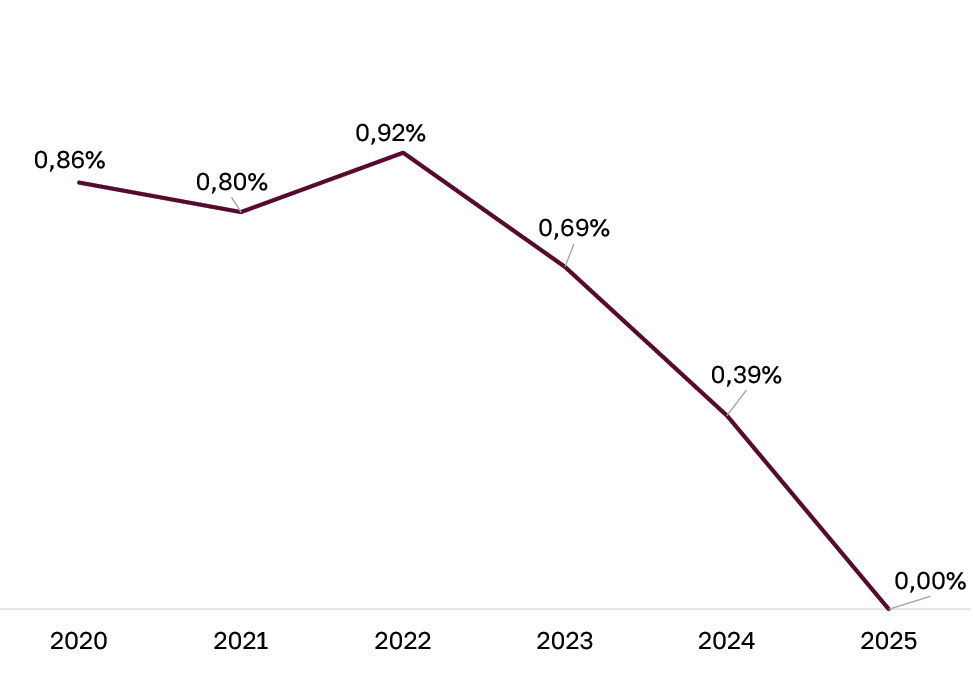
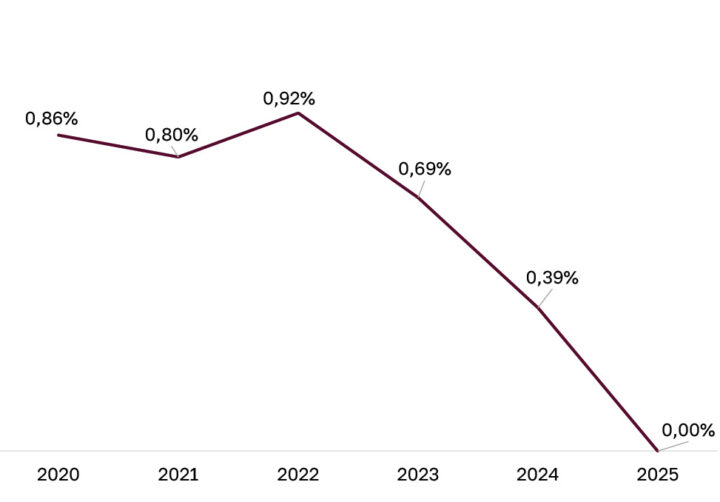
The pace of reassessment since 2022 has been striking. As of December 2023, the fund held stakes in 278 Chinese companies. By December 2024, it reportedly had limited its exposure to both the Chinese and Hong Kong markets to seven holdings, marking a major shift in portfolio assessment. Today, only two residual holdings with no market value remain. As of June 2026 , AP7’s equity fund still lists two Hong Kong-listed holdings, China Huishan Dairy Holdings along with Hanergy Mobile Energy Holding Group, two companies that are headquartered in China. However, both holdings are valued at essentially zero, which means that they are best understood as residual rather than active market exposure.
AP7’s equity fund CNY exposure over time
Explaining the shift away from China
The reassessment should not be read as the result of a country-specific policy. Interviews with AP7’s senior management confirm that the fund evaluates companies, not countries, although there are exceptions linked to international sanctions, such as Russia, Iran and North Korea.
While its main goal is to maximise savers’ long-term value, the fund takes a combination of macroeconomic, financial and geopolitical factors into consideration. In 2024, ahead of the US Presidential elections, the looming threat of sanctions against China and deepening Sino-US competition could not be dismissed. In its decision to reduce holdings in China, the fund considered Sino-Russian relations, the risk of secondary sanctions against Chinese entities, developments in the Chinese property sector, and adverse demographic trends. Its decisions should not, however, be seen as permanent. The fund continues to monitor Chinese companies, many of which are currently outperforming expectations. A delegation visit to China to assess companies first-hand took place in early 2026. Nonetheless, the scale and speed of the shift underscores how rapidly geopolitical conditions can redefine what constitutes acceptable portfolio risk.
Lessons from the past and for the future: To invest or not to invest?
Before asking whether AP7 should re-enter the Chinese market, it is worth asking how it ended up having holdings in some of these companies in the first place. A pattern of earlier holdings in sensitive sectors highlights a structural challenge specific to China. State influence often extends to companies that might appear to be purely commercial, making it difficult for standard financial or environmental, social and governance (ESG) screens to capture the security or geopolitical risks embedded in seemingly ordinary holdings.
Several of the holdings listed in the timeline in Table 1 entered AP7’s portfolio not through active stock picking, but through passive benchmark tracking. This was a consequence of China’s gradual inclusion in the MSCI index framework from 2017, which embedded Chinese equities, including companies already flagged by western security authorities, into the portfolios of globally diversified funds by default.
These cases reflect a structural feature of investing in China. The Chinese state’s pervasive role in both state-owned enterprises and private companies makes it exceptionally difficult to treat equity holdings as purely commercial decisions. When a fund holds shares in a firm with a parent firm linked to China’s nuclear weapons programme, or in a surveillance firm that manufactures equipment used against minority populations, the question of fiduciary duty extends beyond return maximisation.
Interview subjects with insight into AP7’s allocation choices emphasise that financial performance dominates the decision-making matrix. However, the fund maintains an exclusion list, which is updated every six months, and removes companies that fail to meet sustainability standards, including those that violate the Paris Agreement on climate change. Before resorting to exclusion, the fund engages with companies on transition planning. However, in a market in which state involvement is structural rather than incidental, these tools may not be enough to screen the full range of risks that public capital should avoid. Nonetheless, it is important to note that “exit” should be seen more as a move to reduce risk and thereby safeguard long-term pension capital than a retreat from China or a political stance on the country.
Future investments in China cannot be ruled out. Understanding previous holdings and sectoral patterns will be key to any re-entry assessment, not least given the involvement of the Chinese state in the country’s state-owned enterprises and privately owned enterprises. These examples do not exist in a vacuum. Previous holdings in Chinese surveillance companies such as Dahua and Iflytek, which resulted from an index adjustment, underscore an important institutional dilemma. There is a tension between the mandate to maximise financial returns through global indices and the need to mitigate potential security risks.
Key considerations regarding exposure to the Chinese market
Three considerations are key for pension funds assessing their exposure to the Chinese market:
- A systematic strategy for geopolitical risk that considers the intersection of geopolitical and economic factors with traditional financial metrics should be integrated into investment decisions. Specifically, such a strategy should move beyond financial metrics and ESG screening to evaluate how state involvement, sanctions exposure and geopolitical alignment affect the risk-return profile of holdings.
- There is a need for sustained cross-agency dialogue between the security authorities, pension funds, financial regulators and expert communities to help make informed, risk-aware assessments. The cases listed in Table 1, such as holdings in surveillance companies, military-linked conglomerates and coal power operators, suggest that pension funds do not have access to institutional security assessments that would allow them to identify risks proactively.
- Clarity is needed that the level of exposure to geopolitical risk is consistent with AP7’s mandate, which requires, in addition to maximising long-term returns for Swedish pension savers, responsible investment to be an integrated part of its decision-making process. Geopolitical risk, including exposure to Chinese state-linked entities and sanctions risk, falls within the scope of this mandate. Where geopolitical risk creates material downside risk to returns, or where holdings create exposure inconsistent with Sweden’s security posture, the mandate already provides a basis for proactive adjustment. The question arises whether it is being interpreted broadly enough to capture these risks in a systematic manner.
Looking ahead
AP7’s China reassessment illustrates not only the sensitivity, but also the systemic importance of pension fund investment decisions in an increasingly fragmenting world. The fund’s rapid exit from Chinese equities in 2024 highlights how geopolitical risk can translate into concrete allocation changes at speed. At the same time, it raises the question of whether such changes are driven by external events or by a proactive and institutionally grounded framework for risk assessment.
Sweden’s public pension funds manage the retirement savings of millions of people. Their investment decisions shape more than just long-term financial security. National risk exposure is part of the calculus. As geopolitical fragmentation deepens and the complexity of investing in markets such as China increases, the case for a more systematic, cross-agency approach to geopolitical risk assessment becomes harder to ignore.
[1] as of 2022
Om författaren