17 februari, 2026
Principles and pragmatism: China’s evolving approach to Israel and Palestine
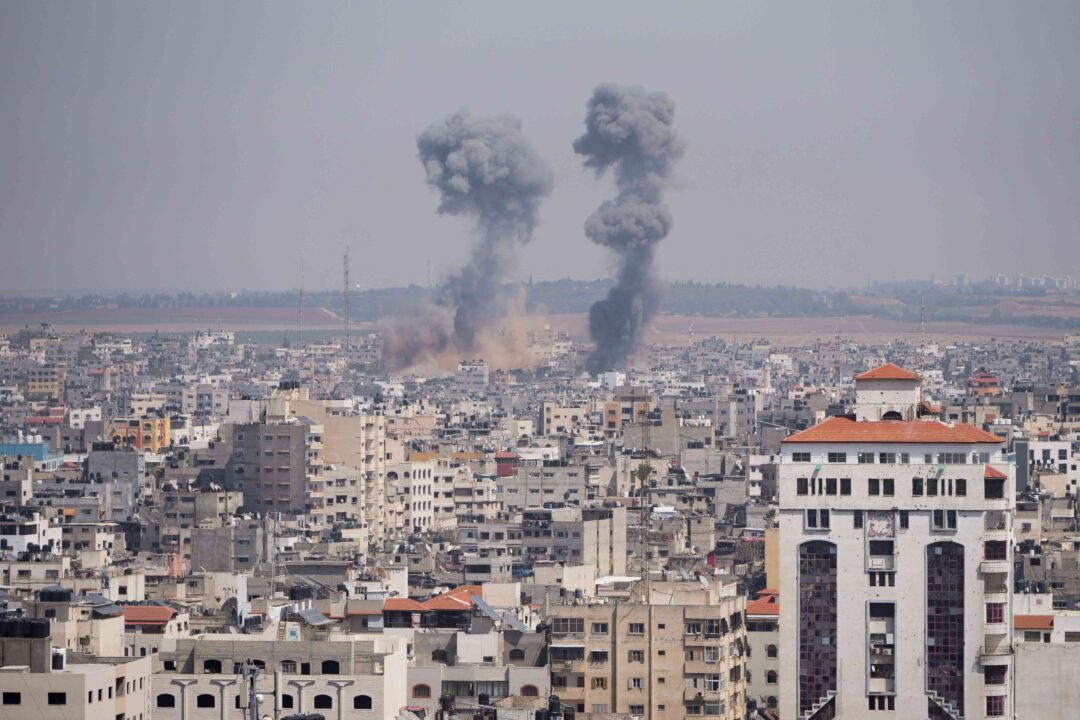
AP Photo/Hatem Moussa
Summary
- China’s Middle East approach is driven by economic and energy interests, making regional stability and balanced relations with highly disparate actors a priority.
- China’s stance on Palestine has shifted from Mao-era ideological solidarity to today’s more pragmatic, diplomacy-centred approach. Yet China still voices support for Palestinian rights and mediates between Palestinian factions.
- China’s criticism of Israel has intensified since 7 October 2023, but ongoing trade, investment, and diplomatic ties reveal a gap between its rhetoric and practice
China’s engagement with the Middle East may be entering its most significant period of change in decades, shaped by the aftermath of the 7 October 2023 attacks by Hamas and other armed militant groups and the ensuing war in Gaza. Within this shifting landscape, China’s long-standing ties to Palestine remain central: China has voiced support for Palestinian rights since the 1960s, even as its regional policy has evolved and its ties with Israel have expanded since the 1990s. The current conflict has intensified these dynamics. This past year, China has spoken out more forcefully in defence of Palestine, and Beijing has made diplomatic efforts by hosting Palestinian factions. At the same time, it wants to avoid alienating Israel, which remains an important partner.
Like all countries, China must now reassess its relationship with both Israel and Palestine in light of the ongoing crisis. Its shifting approach illustrates how China not only balances principles against strategic interests but also navigates tensions between its own principles – such as upholding state sovereignty and territorial integrity whilst also emphasising the “legitimate security concerns of all countries” (合理安全关切), a core pillar of its Global Security Initiative. This commentary focuses on how China’s stance towards Palestine and its balancing act with Israel have evolved since 7 October.
Why the Middle East matters to China
Understanding China’s relations with Israel and Palestine, and its stance on the Gaza conflict, requires examining the broader drivers of its Middle East engagement. China is a significant economic partner in the region; in 2024 commerce between China and the Middle East and North Africa (MENA) was valued at $407 billion, vastly surpassing MENA’s trade with the United States, which amounted to $141 billion. The Middle East is also a key node of the country’s Belt and Road Initiative (BRI). Located at the crossroads of Asia, Europe, and Africa, it is traversed by vital maritime routes and contains chokepoints through which a significant share of China’s trade passes. By 2024, the Middle East had become the top global destination of BRI investments.
Chinese investment and development funding in MENA – valued at $152 billion between 2013 and 2021 – supports several large-scale infrastructure and energy projects. China, which is the largest buyer of crude oil worldwide, also sources the largest share of its crude oil from the Middle East, with Gulf states and other regional suppliers accounting for nearly half of its total imports in 2023.
These stakes shape China’s diplomatic posture, given that they provide a strong incentive to maintain regional stability and prevent disruption to energy supplies, trade routes, and BRI projects. In 2022, Beijing unveiled its “New Security Architecture for the Middle East” (中东安全新方法), which calls for the “vision of common, comprehensive, cooperative, and sustainable security”, referring to an inclusive approach addressing both traditional and nontraditional threats through development and dialogue. It also affirms the “leading role of countries in the region”, underscoring its opposition to external interference and support for locally driven solutions. Beijing maintains relations will all major actors in the Middle East, engaging with countries like Israel, Iran, and Saudi Arabia despite well-known rivalries, a careful balancing act that reflects China’s formally stated commitment to non-interference policy and its preference for pragmatic engagement.
These economic, strategic, and energy considerations explain why the Middle East matters to China today. Yet Beijing’s stance is also rooted in a history of anti-imperialist solidarity and its long-standing support for Palestinian rights.
From ideology-based solidarity to strategic pragmatism
China has a long history of professed solidarity with Palestine. Its support dates to the 1960s, when Mao Zedong (毛泽东) placed China at the forefront of a global anti-imperialist movement. In 1965, Mao famously told a visiting Palestine Liberation Organisation (PLO) delegation that “imperialism is afraid of China and the Arabs”, portraying Israel and Taiwan as imperialism’s regional bases. This rhetoric was not merely symbolic. During the Mao era China not only provided Palestine with political backing, but also training and arms.
However, Beijing toned down its anti-imperialistic rhetoric in the late 1970s when Deng Xiaoping (邓小平), who adopted a more pragmatic approach, came to power. Deng prioritised economic modernisation and sought to attract Western investment to fuel China’s development, making further rapprochement with Washington a central goal. Reducing support for anti-imperialist struggles was part of this effort, as China aimed to present itself as a peaceful actor. This shift also marked the beginning of the reformulation of Beijing’s Palestine policy. Whilst being one of the first countries to recognise the state of Palestine in 1988, during the First Intifada (1987–1993), China’s policy increasingly converged with that of Western states, advocating for diplomatic dialogue and a two-state solution. Yet Beijing has continued to interpret the conflict through an anti-colonial lens, setting it apart from most Western countries.
Another turning point came in 1992 when China established diplomatic relations with Israel, driven by trade interests, access to military technology amidst Western embargoes, and the perception that the Arab–Israeli conflict was easing. Since then, China has continued to rhetorically support Palestine whilst pursuing a pragmatic Middle East policy, prioritising stability and BRI expansion in the 2010s and adopting a mediating role in the 2020s, allowing it to preserve its ties with Israel.
Rhetorical support for Palestine and diplomatic engagement
China’s response to the 7 October 2023 attacks and the ensuing conflict in Gaza illustrates its long-standing rhetorical support for Palestine. Beijing has refrained from labelling Hamas as a terrorist organisation whilst calling for an immediate ceasefire.
China has also sought to facilitate Palestinian dialogue in the ongoing conflict. In July 2024, Beijing hosted fourteen Palestinian factions from several political and militant groups in an effort to promote unity. That same year, China co-launched the Global Initiative to Galvanise Political Commitment to International Humanitarian Law, a project aimed at safeguarding civilian protection in armed conflict – a principle that Beijing has emphasised in its response to the Gaza conflict. Now joined by more than ninety nations, the initiative still notably lacks the support of Israel and the United States.
Furthermore, China has continuously advocated for Palestine in international forums. In February 2024, it defended Palestine’s right to self-determination and declared Israel’s occupation illegal at the International Court of Justice. China has also repeatedly reaffirmed support for a two-state solution at the United Nations. Taken together, these actions highlight China’s efforts to project itself as a defender of Palestinian rights and international law.
China’s changing tone on Gaza
Behind China’s rhetorical support for Palestine is a more complicated reality. Since 7 October, contradictions between China’s words and deeds have become harder to ignore, exposing the challenges of its balancing act in the region.
Recent events have led analysts to believe that relations between China and Israel are starting to shift. During the initial period after the outbreak of the conflict, China’s statements regarding the Gaza conflict remained mostly neutral, emphasising restraint and the need for a ceasefire without assigning blame. However, they have gradually become more accusatory. Since the latter half of 2024 and throughout 2025, China has repeatedly and explicitly opposed Israel’s ongoing military actions in Gaza. In December 2024, China’s Deputy Permanent Representative to the UN, Geng Shuang (耿爽), described Israel’s bombing of Gaza as “savage”. In March 2025, China’s Permanent Representative to the UN, Fu Cong (傅聪), strongly criticised Israel’s “obsession with the use of force”.
This increasingly assertive stance culminated in a diplomatic clash in September 2025, when Israel’s Prime Minister, Benjamin Netanyahu, accused China of partaking in a global campaign to isolate Israel, an allegation Beijing denied and strongly condemned. Weeks later, Israel joined a US-led statement at the UN condemning China’s human rights record, a decision Beijing criticised. This was a rare move by Israel, which has traditionally avoided such condemnations to safeguard its relations with Beijing.
Maintaining relations with Israel amidst rising tensions
At the same time, China’s behaviour towards Israel in other matters has been more nuanced. Its relations with Israel have progressively developed over three decades, and Beijing has been reluctant to jeopardise them. While Chinese officials call for adherence to international law in global forums, it has refrained from taking measures that would carry real costs for Israel. Unlike several Global South states that have downgraded relations with Israel after the conflict began, China has maintained, and in some cases deepened, its engagements with Israel.
Overall, trade between the two countries has remained relatively stable and Chinese firms continue to secure major infrastructure contracts in Israel. In early 2024, the state-owned shipping company COSCO, which has close links to the PLA, halted all of its operations in Israel. This was interpreted by some as China taking a political stance or even enforcing a trade boycott. In 2025, however, Israel approved an expansion for Haifa Bay Port, which is operated by another Chinese state-owned enterprise, Shanghai International Port Group (SIPG).
In 2025, it was revealed that Israeli forces use Chinese-made DJI drones in Gaza, allegations that neither the company nor the Chinese government has addressed, despite DJI having previously suspended all sales to Ukraine and Russia following similar reports. Moreover, a recent report by the UN Human Rights Council listed Fosun International Ltd., a multinational Chinese conglomerate, as an actor profiting from its business in illegal Israeli settlements in Palestine. The report is the latest in a series of such findings; in previous years, independent watchdogs have documented several Chinese companies profiting from settlement-linked projects.
Palestine as China’s diplomatic tool
Economically, Palestine offers China few benefits. It is not a major trading partner, nor has it been a major recipient of BRI investments. Yet it gives Beijing a platform. By invoking international law and championing Palestinian rights, China portrays itself as a voice for justice and a defender of the Global South. This narrative is used by Beijing to contrast its own rhetoric with what it portrays as US obstruction in addressing the Gaza conflict, supporting its efforts to undermine US hegemony and promote multipolarity.
The increasingly assertive statements in recent months may indicate that China perceives potential soft power advantages in becoming more outspokenly critical of Israel. Still, the contradictions are hard to miss as Beijing’s assertive statements towards Israel occur alongside ongoing trade and investment deals.
Om författaren



One year in: What Trump means for China