Andy Wong / AP / TT
Summary
- China’s new Five-Year Plan (FYP) indicates broad continuity with present day trends. These trends include a persistent supply-demand imbalance in the domestic economy and increasing trade tensions with global partners. The main reason for this situation is consistent support for industry at the expense of households and the resulting industrial overcapacity and rapidly growing exports.
- China is firmly wedded to an economic model which deepens and exacerbates domestic economic problems, while also driving economic conflict worldwide. Behind this policy choice lies a commitment to achieve technological supremacy in order to enhance China’s state power and geopolitical advantage.
- China’s leaders believe that this is a time of considerable geopolitical opportunity, with a global adjustment of the balance of power to China’s advantage already underway. Policies to enhance China’s technological strength are a way to capitalize on these opportunities. Adversarial trade relations are not in themselves sufficient to deter China from doubling down on its strategy.
- Western and other advanced economies should understand that China’s economic choices as reflected in the FYP are the embodiment of a long-term strategic orientation which aims to revise the global balance of power. Responses must not be narrowly economic, but should be tailored to prevail in a long-term political competition with a systemic rival.
The new Five-Year Plan – mostly more of the same
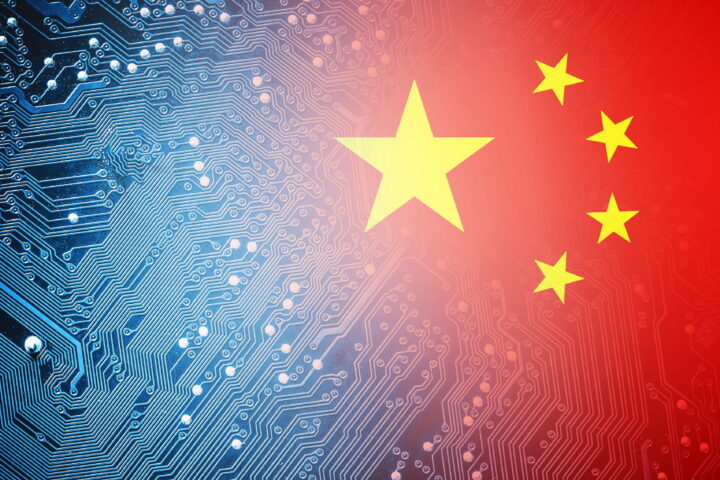
The analytical consensus on China’s new Five-Year Plan (FYP) is that no significant change in China’s economic policies is expected. The economy will remain heavily skewed towards investments to the detriment of consumption. The plan’s binding targets are almost all on the investment side, including ambitious spending on research and development. Investments will focus above all on technology and innovation. China’s central aim for the coming years is to secure a leading role in the “next round of technological revolution” (新一轮科技革命). This includes the development and integration of AI, pushing ahead and staying ahead in emerging technologies as well as capturing any possible market shares in future technologies. Demand-side measures in the plan, on the other hand, are more vague and conceptual.
Judging from the FYP, the current imbalance between investment and consumption in China’s domestic economy will likely continue to deepen. Domestic demand will be even less capable of absorbing increasing overproduction, which will lead to more dependence on exports. Consequently, the present trend where the export of Chinese overproduction fuels global trade tensions is also set to worsen. This Brief summarizes these problems, which are inherent to the present economic policies, and ventures the explanation that such imbalances are viewed as a necessary cost to achieve global technological supremacy and associated hard power advantages.
Worsening supply-demand imbalance
The problem for China’s domestic economy can be summarized as a major imbalance between too much supply and too little demand, or equivalently, too much investment and too little consumption. On the supply side, China today presides over an almost unprecedented industrial miracle. Quantitatively, most estimates show China’s share of global manufacturing at above 30 percent, and qualitatively, China is the research leader in almost 90 percent of critical technologies (technologies considered essential for national security or economic prosperity), measured by high-impact research papers. This is the successful result of long-term industrial policy, but has also led to major dysfunctions. China’s production sector has been in deflation for over three years, which it has only exited recently because of price shocks caused by the Iran war. High levels of output growth coexist with collapsing returns on investment. More than 25 percent of listed firms in China reported a loss during the first half of 2025, and around 12 percent of Chinese firms are so called “zombie firms” (firms whose revenue is not enough to cover interest payments), a share that rises to almost 30 percent of firms in green tech. Aggressive pricing wars between non-profitmaking firms (increasingly referred to as “involution-style” competition), enabled to survive and even expand their production thanks to government support, have caused a deflation spiral and an overall crisis of domestic demand.
Weak overall demand is reflected in a general state of economic malaise for the average Chinese citizen. Unemployment is growing, despite the official “urban unemployment rate” remaining around 5 percent, a figure that surely does not reflect true joblessness and underemployment among for instance the migrant and rural population – some informal estimates have put the true youth unemployment rate at close to 50 percent. The property sector, which accounts for roughly half of household assets, is still in crisis, with real (inflation-adjusted) prices lower than 15 years ago. The stock market has underperformed – the Shanghai Composite Index has seen only about 5 percent in real returns since 2010, and the index price of CSI 300 is essentially flat since the mid-2010s. Official statistics record wage declines in some sectors, including industries like AI and new energy, again likely the tip of an iceberg. Consumer spending seems to be on the way down, with retail sales now barely growing and data indicating that households prioritize deleveraging debt. Signs indicate that China has probably been in overall deflation for some time.
This state of things is fundamentally the result of a long-term policy that supports industry at the expense of households. As the FYP contains no indications of a fundamental rebalancing in this regard, we should expect this supply-demand contradiction to deepen as the most likely scenario. While there is a long-standing ambition to build a self-sufficient economy built on domestic demand, which is reiterated in the FYP, present industrial policies in effect hinder such a development.
Exports – a solution for China, a headache for the world
The course charted in the FYP also means no change to the increasingly adversarial trade dynamics between China and the rest of the world. The more the domestic supply-demand imbalance worsens, the more China has to rely on exports for growth. So far, China’s high competitiveness – a combination of high volumes, increasing quality, and low cost – is reflected in an ongoing export boom on a massive scale which shows no signs of letting up. For example, between 2019 and 2025 the EU’s goods imports from China grew more than 50 percent, while the EU’s exports to China barely grew at all. The EU’s trade deficit in goods with China grew by almost 20 percent during 2025 alone. Figures for the first 2 months of 2026 of China’s exports to the EU show an astonishing growth of 27.8 percent compared to the same period last year. China’s total trade with the world surged 18.3 percent year-over-year during the same period.
This avalanche of Chinese exports is increasingly viewed as a challenge to domestic economies worldwide. As a consequence of falling producer prices and a persistently undervalued currency, export prices for Chinese-manufactured products have fallen more than 30 percent relative to the US and the euro area since 2015, which has eroded the competitiveness of Western producers. Policy makers, for example EU trade commissioner Maroš Šefčovič, are calling China’s trade surplus “unsustainable” for the rest of the world. Chinese competition, sometimes called a “second China shock”, is so intense that Goldman Sachs has calculated that output growth in China now actually reduces growth in the rest of the world by outcompeting domestic industry through exports.
The pressure from Chinese exports has affected other countries’ trade and industrial policies. The United States has quite substantial tariffs on Chinese goods in place, today averaging around 30 percent. The EU introduced “countervailing” tariffs on Chinese EVs in 2024. The European Commission has drafted an Industrial Accelerator Act, released in March 2026, aimed at shoring up Europe’s industrial strength, which among other things contains “Made in Europe” procurement requirements to disqualify foreign actors as strategic suppliers. The Commission is also said to be working on a new trade weapon specifically directed at Chinese overcapacity. Meanwhile, drastic measures have been proposed by member states: a much discussed French government report has called for 30 percent European tariffs on all imports from China to protect European industry from the onslaught of subsidized overproduction. Reactions are not limited to developed countries: countries all over the globe have introduced tariffs and other trade barriers to protect their industries, including India, Brazil, Argentina, and many others. Even Russia, China’s top strategic partner, has introduced restrictive measures on for instance vehicle imports. As the FYP leads us to expect an ever more imbalanced domestic economy with an ever larger need to offset ever larger overproduction on the world market, an increase in such trade tensions between China and its partners around the world seems almost guaranteed.
The politics of technological supremacy
China remains firmly wedded to a development pathway that deepens structural imbalances in the Chinese domestic economy and at the same time fuels adversarial dynamics with global trading partners. These trends carry the seeds for future crises. Why does China stick to this model, despite the considerable costs it incurs? Part of the reason is of course transformation costs and other risks associated with any major reforms. Stopping the transfers to industry and innovation would mean letting a whole swath of unprofitable businesses meet their ungracious demise. A wave of unemployment would likely result until the economy readjusts, possibly prompting a period of social unrest. Stopping major industry support would also be impossible without scrapping or at least substantially revising the overall GDP growth target, which has been the major policy engine for decades. This would likely make it necessary to revise China’s target for “basically achieving” socialist modernization by 2035. There is also reason to think that Xi Jinping fears the structural effects of consumption-promoting reforms as such, as they inevitably would redistribute resources into private ownership and empower citizens at the expense of the party-state. Such a development would run counter to his consistent efforts to strengthen the party’s grip on all aspects of society.
However, the fundamental explanation lies in the party-state’s demonstrated views on the connection between technological supremacy and national greatness. The aim to achieve technological parity with developed countries, or outright supremacy, is one of the most long-standing features of CCP planning, going back to the very earliest days of the PRC. If anything, this aim has only grown in importance over the years. “High-quality development” (高质量发展) in accordance with Xi Jinping’s “New Development Philosophy” (新发展理念) is essentially a form of development driven by technological breakthroughs. According to the latest Party Congress in 2022, long term goals for 2035 include “significantly increas[ing] economic strength, scientific and technological capabilities, and composite national strength” and “join[ing] the ranks of the world’s most innovative countries, with great self-reliance and strength in science and technology”. This is one milestone towards the Great Rejuvenation of the Chinese nation, slated for 2049, which is widely taken to imply regional hegemony and global superpower status – including the integration of Taiwan into the PRC. The FYP also reiterates past years’ insistence that the world is undergoing “profound adjustments in the international balance of power” (国际力量对比深刻调整), sometimes called the “centennial changes” (百年变局), implying an ongoing and substantial transfer of power from the West to the Global South, led by China.
Thus a plausible reading of the situation is that the deeper reason the CCP and its supreme leader are willing to accept the considerable costs its policies entail, is because they believe that China is on the cusp of engineering a world historical shift of power, powered by technological breakthroughs, where China hopes to emerge as the main locus of global technological civilization. Technological supremacy is part of a strategy that essentially aims at achieving geopolitical advantage. The effect of these policies on China’s trade relations with the West is more than just collateral damage, as a fundamental revision of power relations with the West is inherent to the long-term strategy. Promoting the deindustrialization of Western economies through trade is perhaps not a goal in itself, but such effects can be understood by the CCP as evidence that its strategy is working, as the surpassing of industrial competitors follows naturally from achieving technological supremacy. China’s economic policy, as embodied in the FYP, is not just about economic prosperity narrowly understood, but about creating economic conditions for reshaping the global order in a way that reflects China’s interests. If this policy leads to economic conflict, that is viewed as acceptable as long as conditions for winning that conflict are in place.
A new Great Leap Forward?
Mao Zedong (毛泽东) first articulated a long-term goal to surpass Western industrial economies in 1958, at the start of the Great Leap Forward. Today, this goal has been achieved in many ways, but the Communist Party is still not satisfied. Industrial production is now once again viewed as a means to achieve political ends. This time the goal is even more ambitious: to catapult China to the truly preeminent position among world powers. China’s domestic economy and foreign relations are made subservient to this goal, and, while there is no reason to believe that the effects of this “Great Leap” will be as disastrous as the original one, the price exacted in terms of systemic dysfunctions is still considerable. From the party’s perspective, however, whatever domestic ills result from its one-sided focus on science and technology are not seen as absolutely undesirable, as long as they contribute to industrial and technological supremacy. On the contrary, the international situation perhaps dictates that the population must accept a prolonged period of welfare stagnation, while an increasingly authoritarian party steers the ship of state to establish China in its future role as the preeminent world power. This historical comparison is meant to underline an offensive intent behind China’s present economic policies, which is not fully captured by analyses that correctly underline how an increased concern for self-reliance and securitization of economic activities fuel increasing authoritarianism.
Taking this perspective, we are afforded a much-needed systemic view on the relations between China and the West. China is not a status quo player when it comes to its envisioned role in a future world order but remains led by a party with ambitions to substantially restructure global norms, institutions and power relations. China’s industrial miracle and the attendant position of strength in the global economy is fueled by this ambition and maintained by subordinating its civil population and market actors to political objectives at an immense scale.
This systemic angle also reveals a fundamental weakness behind China’s impressive feats of technological civilization. In the system presided over by the CCP, technological improvements do not emerge from the bottom-up innovation generated by independent economic actors, which then enables broad increases in productivity and income. Instead, strength in technological areas deemed strategic is financed by forcibly suppressing domestic incomes, and at the cost of lower factor productivity, extraordinary waste and increasingly adversarial foreign relations. This is not just an authoritarian model at odds with democratic values – it is also an economic model that is vulnerable to shocks but also liable to produce crises. Loss of external demand would threaten China’s primary growth engine – which could happen, for example, if countries were to restrict Chinese overproduction from accessing their markets for political reasons.
To conclude, if there is one lesson that the Western countries should learn from the new plan, it is to abandon the idea that competition with China is merely a competition for market shares in specific economic segments. China’s domestic economy is run according to political imperatives, not market logic. The metaphor of the economic playing field is misleading, because Western countries and China are not playing the same game. China’s game – to use economic central planning and industrial policy to acquire technological supremacy over competitors for strategic reasons – is a political game, albeit one that employs economic tools. The Western response must therefore be a political strategy for maintaining strategic resilience under conditions of economic conflict.
Some pointers for EU policy
This Brief is an attempt to situate China’s economic planning in a broader strategic context and explain what it reveals about China’s long-term aims. The view it affords has certain implications for EU policy.
First, EU trade policy should be designed with the insight that China, a systemic, authoritarian rival with global revisionary ambitions, is the main global beneficiary of free trade policies in the traditional sense today. For the EU, the result of China’s policies is deindustrialization, caused by attempts to compete at market terms with a non-market system, a zero-sum rather than positive-sum dynamic. As an overall direction reflecting this insight, the EU’s trade policy vis-à-vis China should aim at reducing the level of overall market exposure towards China, as long as its domestic economic model is not substantially reformed. While it may be argued that strategic competition with China does not require such broad-based de-risking, in fact there is no logical endpoint to the ongoing securitization of economic ties. Attempts to preemptively delimit the scope of de-risking likely underestimate the risk concentration inherent to our interdependence with China.
Some research on such vulnerabilities already exists and should be turned into usable policy tools. This would raise awareness of our present level of strategic leverage and at the same time deter economic coercion by signaling a capability to retaliate.