How can the NB8 manage its dependence on China in the green energy transition?
Energy dependence has become a geopolitical liability. Russia’s war against Ukraine, the US-Iran war and tensions with the Kingdom of Denmark over Greenland have all exposed the strategic weight of energy independence, critical minerals, and Arctic access. For the eight NordicBaltic states (NB8), the next vulnerability may emerge from the green transition itself, where China’s dominance in clean technologies and critical mineral processing can be converted into strategic leverage. Some dependence is unavoidable in the short term; the task is to manage it deliberately rather than let it accumulate by default. This policy brief argues for integrating green energy security and Arctic security within a one strategic framework, because the Arctic’s critical mineral resources, renewable energy infrastructure and emerging transport and digital connectivity projects are relevant to Europe’s efforts to strengthen its energy dependence. This brief proposes collective measures to limit strategic dependence on China in the long term.
About the Nordic-Baltic Eight Policy Brief Series:
In this new policy brief series, the eight leading institutes of the Nordic-Baltic Eight countries commit to closer collaboration on analysis and research. The aim is to deepen understanding of the evolving security, political, and societal dynamics shaping the Nordic–Baltic region amid renewed great-power competition.
The views expressed in the policy briefs are those of the author(s) and do not necessarily reflect the positions of the participating institutes. New briefs will be published on this webpage on a continuous basis as they are released.
The eight institutes involved are:
Swedish Institute of International Affairs (UI)
Danish Institute of International Studies (DIIS),
The Finnish Institute of International Affairs (FIIA),
The Icelandic Institute of International Affairs (IIA),
The International Centre for Defence and Security (ICDS) in Estonia,
The Institute of International Relations and Political Science at Vilnius University (TSPMI),
About the authors


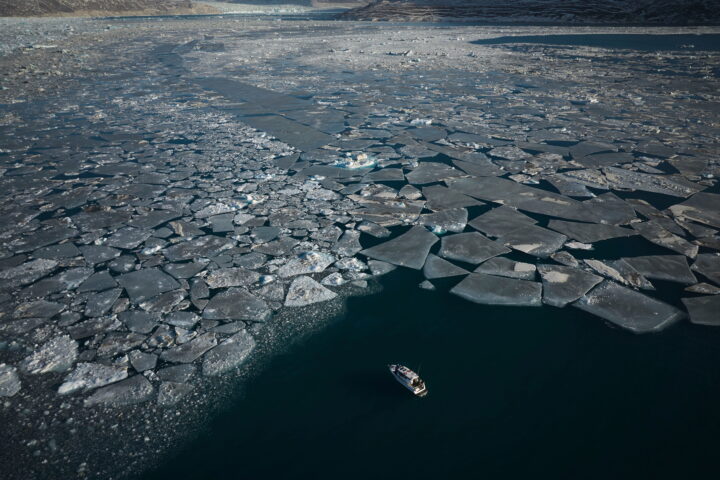


Trump’s Greenland deal bolts the door on China – at a high cost